5 Best All-Inclusive Resorts With Lazy Rivers in Mexico, Punta Cana and Jamaica
It's not just the kids that want a lazy river!
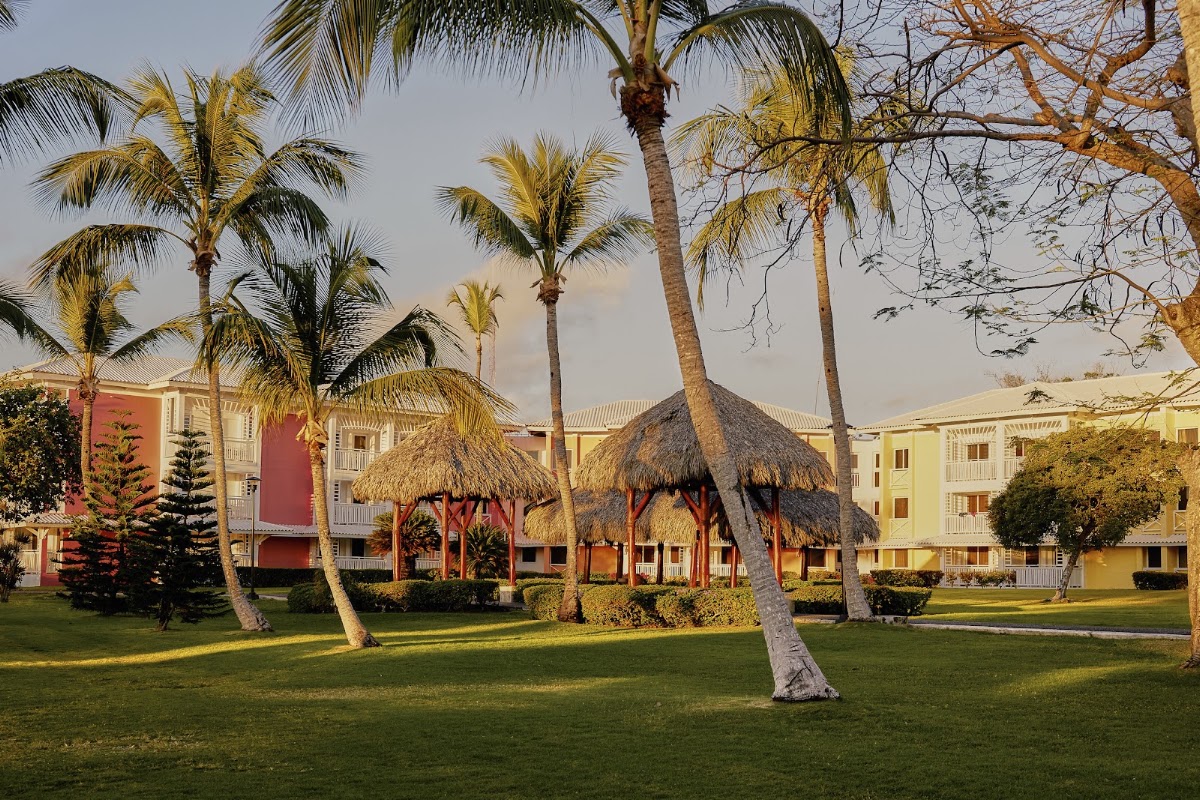
In 1969 the eastern tip of the Dominican Republic had no road, no hotel and no airport, and the place was called Drunkard's Point. Fifty years later it is the busiest airport in the country and one of the largest concentrations of all-inclusive rooms on earth. Almost none of that happened in the usual order.
In 1969 a group of investors led by the New York labour lawyer Theodore Kheel bought an enormous parcel at the eastern end of the Dominican Republic: jungle, coconut groves, a few fishing and farming communities, and about five miles of coast. There was no proper access road. You arrived by boat, by mule, or in a small aircraft. The established town of any size, Higüey, was a long way inland.
The land was known locally as Yauya, or Punta Borrachón, which translates roughly as Drunkard's Point. A young Dominican businessman named Frank Rainieri joined the project, argued that the parcel was worth more as a tourism destination than as timber or exported sand, and renamed it after the cana palm growing all over it, whose broad leaves had always been used for thatching roofs. Punta Cana means, more or less, point of the cana palms.
That is worth sitting with for a second. The name of one of the best-known holiday destinations on earth started life as a brand invented for a private property development, and it worked so well that it swallowed the region, the airport and eventually the province's international identity.
The Punta Cana Club opened on 24 October 1971: ten simple cabins holding about twenty rooms, a central building with a kitchen, a bar, a dining room and a laundry, and a dirt airstrip for light aircraft. Guests came by small plane or boat because the roads were not worth the name. There was no resort town around it because there was barely a town at all, and the isolation was most of the appeal.
It is genuinely difficult to hold that picture and the present one in your head at the same time. The same development is now Puntacana Resort & Club, with a marina, golf, residences and its own nature reserve, and the coast it started has more all-inclusive rooms on it than almost anywhere in the world.
Ten cabins proved that people would come. Turning that into an industry needed somebody with an international brand and a tour-operator pipeline, and in 1976 the developers reached an agreement with Club Méditerranée. Club Med Punta Cana opened in 1981 on roughly 40 hectares of beachfront, and it was the first all-inclusive resort in the Dominican Republic.
This is the part usually left out of the story, because by the time most travellers heard of Punta Cana the Spanish chains were the landscape. Club Med got there first, four years before Barceló and ten before RIU, and it did so on a coast with no airport. It also took part in the push to get one built, which is why the resort still sits about ten minutes from the terminal: the hotel and the runway were conceived as parts of the same project rather than as a happy accident of planning.
The Dominican government was in no hurry to build a major airport for a destination that did not yet exist, which is a reasonable position and would have killed the place. So Grupo Puntacana, after what its own history describes as an eight-year effort across three governments, got permission to build one itself. Punta Cana International Airport opened in December 1983, and it is widely identified as the first privately owned airport built for international commercial service anywhere in the world.
The first terminal was designed by the Dominican architect Oscar Imbert as an open-air building, naturally ventilated, roofed in palm thatch. That decision has outlived every commercial argument for it: passengers still step off an aircraft into something that announces where they are, and the thatch is cana palm, the same plant the destination was named after. The arrival is the first line of the story rather than a corridor.
Everything downstream follows from that runway. A charter from Manchester or Montreal could land people 30 minutes from their room instead of hauling them across the country from Santo Domingo, which is precisely the economics a package holiday needs. PUJ is now the busiest airport in the Dominican Republic, handling more than ten million passengers a year, and it is still owned by the company that built it.
A resort coast normally happens in a sequence: there is a town, the town gets roads and an airport, hotels appear, tourism grows. Punta Cana ran that backwards. Beachfront investment came first, then a tiny hotel, then a major resort, then a privately built airport, then the roads, and only then the city.
Bávaro is the clearest evidence of it. It began north of the original development as somewhere for the people building and running the hotels to live, and it grew into the region's actual commercial centre: shops, banks, schools, clinics, restaurants. Workers arrived from across the Dominican Republic to take the jobs. The resorts did not move into a city, in other words. They generated one.
That is a genuinely unusual thing for an industry to have done, and it is the reason the destination has no colonial old town to visit and no historic port. Havana, San Juan and Nassau were places that later acquired resorts. Punta Cana is a resort that later acquired a place.
The model is often written about as a pricing gimmick. On this coast it was an engineering answer to a real problem. In the early years there was nowhere else to eat, drink or spend an evening, the roads were poor, the nearest town was far inland, and a hotel had to generate its own water, power and entertainment or guests would have none. Bundling it all into one price was not a marketing flourish; it was the only way to run a holiday there at all.
What is interesting is that it stuck. The roads came, the restaurants came, Bávaro filled up with places to go, and the all-inclusive stayed, because by then travellers and tour operators had decided that a Punta Cana holiday simply is the kind where the bill is settled before you land. A constraint became a preference, and then a definition.
Once Club Med and Grupo Puntacana had proved the destination, the Spanish chains recognised the eastern Dominican coast as the thing they had spent twenty years learning to build. Barceló opened at Bávaro in 1985, RIU reached Punta Cana in 1991, what is now Grand Palladium Punta Cana was running under Fiesta names by around 1992, and Iberostar opened at Bávaro in 1993. Bahia Principe, Meliá and the rest followed.
They brought a complete system rather than a building: charter-air relationships, European tour-operator distribution, large-scale catering, low-rise campuses of several hotels sharing one site, and the operational habits of running all of it at volume. Every part of it had been rehearsed on Mallorca and in the Canaries. Punta Cana is where the Mediterranean model met a coast with year-round sun and enough flat land to run it at a scale Mallorca could no longer offer.
So the coastline is Dominican, and its resort landscape is substantially Mallorcan. Those two facts sit on top of each other along the whole of Bávaro beach.
This is the part with practical consequences. The name is used for an entire coast, not a town, so two hotels both sold as Punta Cana can be an hour's drive apart with completely different beaches. Worth knowing which one you are booking.
The water changes along it too. The region sits near the meeting of the Caribbean and the Atlantic: the southern areas around Punta Cana proper and Cap Cana are calmer, Bávaro is protected in places by an offshore reef that flattens the Atlantic swell into the turquoise shallows the brochures are made of, and Macao and Uvero Alto further north are more exposed, with real waves. That reef is also the reason the boom happened where it did: a long beach, calm shallow water, coconut palms and flat coastal land is close to the ideal specification for a large resort.
Grupo Puntacana gave about 1,500 acres to create the Ojos Indígenas Ecological Reserve, protecting forest and a chain of freshwater springs the area calls ojos, eyes. Some are open to swim in, others are kept for wildlife and research. The group's foundation also works on coral restoration, sea turtles, birds, waste, sustainable agriculture, and community health and education.
In 1997 the Dominican designer Oscar de la Renta and the Spanish singer Julio Iglesias came in as investors, both built homes there, and de la Renta went on to design Tortuga Bay, the small luxury hotel at Puntacana Resort. It is a long way from ten cabins and a dirt strip, and the through-line is the same one Rainieri started with: the beaches and the reefs are the asset, so looking after them is not philanthropy so much as maintenance.
Frank Rainieri named it in about 1970 after the cana palm growing there, whose leaves are used for thatch. The area had been known as Yauya or Punta Borrachón, roughly Drunkard's Point, which was not going to sell holidays. The name was invented for a private development and ended up naming the whole coast.
Yes. Grupo Puntacana built it after the government declined to, opened it in December 1983, and still owns and runs it. It is widely identified as the first privately owned airport built for international commercial service in the world, and it is now the busiest airport in the Dominican Republic.
The Punta Cana Club, ten cabins and about 20 rooms, opened in 1971. The first large international resort was Club Med Punta Cana in 1981, which was also the first all-inclusive in the Dominican Republic. The Spanish chains arrived from 1985.
Not quite. Bávaro is a district north of Punta Cana proper, and it holds the largest concentration of established all-inclusive resorts, so a great many holidays sold as Punta Cana actually happen in Bávaro, Arena Gorda or Uvero Alto. It grew up as the community serving the resorts and is now the area's commercial centre.
Because the Spanish chains had spent twenty years perfecting the large beachfront package resort on Mallorca and in the Canaries, and the eastern Dominican coast offered the same conditions with year-round sun and far more space. Barceló arrived in 1985 and RIU, Iberostar, Bahia Principe, Meliá and Palladium followed.
It's not just the kids that want a lazy river!
An all-inclusive week is one of the biggest single purchases most households make all year. Booked carelessly it earns nothing. Booked right, the same trip at the same price comes back three ways: a member discount, airline miles, and card points, and only one of the three needs a credit card.